The U.S. Supreme Court vindicated the Trump administration’s stance that Temporary Protected Status is temporary, ruling 6-3 that the government can end TPS for migrants from Haiti and Syria.
The ruling clears the way for the U.S. Department of Homeland Security to end legal protections for immigrants with TPS — many of whom have had the designation for years — and begin deportations if they don’t comply.
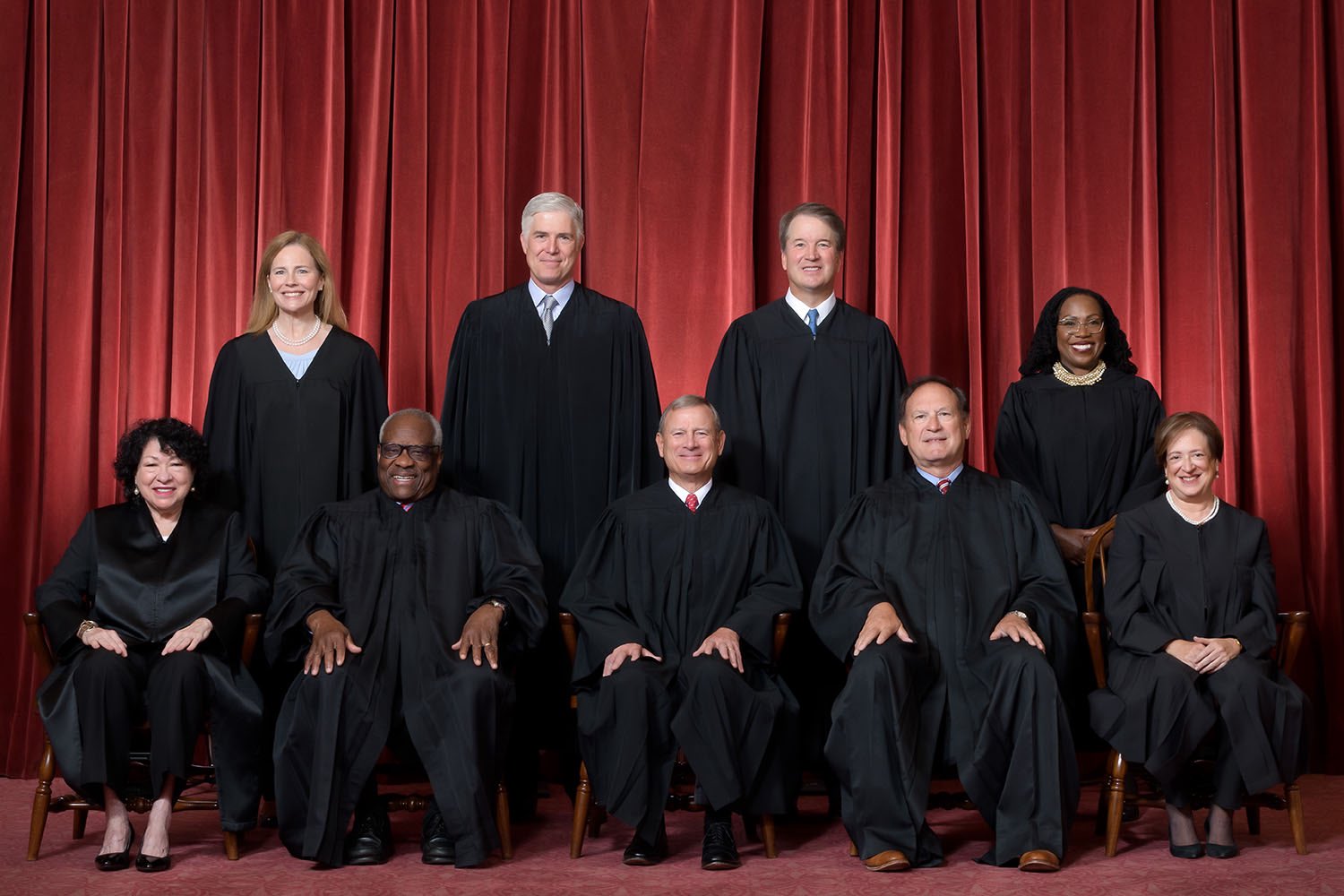
Justice Samuel Alito wrote the majority opinion in the case, Mullin v. Doe, holding that TPS recipients cannot block revocation of their status pending litigation.
DHS has moved to end the TPS designation for more than a dozen countries, including Haitian and Syrian nationals, which was immediately challenged by immigration advocates.
The justices rejected giving Haitians and Syrians with TPS judicial relief, essentially postponing the revocation of their status, while they challenge the Trump administration’s efforts to revoke it in court.
The June 25 ruling reversed lower district court judgments in Washington, D.C., and the Southern District of New York that barred the Trump administration from ending the designations under the program. The court heard oral arguments on April 29.
The justices held that the law establishing TPS explicitly blocks recipients from legal relief unless their claims have a constitutional basis.
“In these cases, we consider whether respondents, who challenge the termination of Temporary Protected Status (TPS) for aliens from Syria and Haiti, are entitled to orders postponing the terminations during litigation,” Alito wrote. “We hold that they are not.”
The ruling was celebrated as a big win by Trump administration officials, who have fought to terminate temporary protections for certain migrants already in the country.
“The T in TPS stands for TEMPORARY, yet many of these designations became de facto amnesty,” DHS General Counsel James Percival shared on X. “This is a win for the rule of law and common sense.”
The decision means DHS has the authority to revoke protections for roughly 356,000 Haitian and Syrian immigrants living in the U.S., likely accelerating removals among those groups.
Homeland Security Secretary Markwayne Mullin also praised the ruling on social media and made his rounds on the news on Monday.
NOT TIRED OF WINNING 🇺🇸
Temporary Protected Status is meant to be TEMPORARY. pic.twitter.com/PkpAONcEee
— Homeland Security (@DHSgov) June 25, 2026
Mullin said it was never meant to be permanent legal status, and immigration officials don’t have to go through the process of extraditing them back to their home country.
“The court ruled correct on this in a 6-3 decision,” Mullin told co-host Dana Perino. “These individuals, some of these guys have been here 15 to 20 to 30 years. I understand that, but they had an opportunity during that time if they wanted to try to change their status, they could. They chose not to. Now the Temporary Protected Status is over. They have to go home.”
Those with TPS have two choices: seek permanent residence or return to their home country.
DHS has offered a free flight and cash incentives to illegal immigrants who voluntarily self-deport, and the offer applies to those with TPS, Mullin said.
“If you are in the country without status, you are here illegally,” Mullin shared on X. “Illegal aliens have two choices — they can either accept a $2,600 stipend and a flight home to self deport, or they will be removed.”
Let me be ABUNDANTLY clear:
Temporary Protected Status is just that: TEMPORARY.
Democrats tried to turn this into a defacto amnesty program. President Trump put a STOP to it.
If you are in the country without status, you are here illegally. Illegal aliens have two choices —… https://t.co/v9CQ9alA5G
— Secretary Markwayne Mullin (@SecMullinDHS) June 28, 2026
Mullin told Perino on “America’s Newsroom” that DHS will help them make arrangements to go home or possibly to another country, but DHS isn’t bound by law to find them a third country.
“They came over with TPS,” Mullin said. “We always knew it was temporary to begin with. …This isn’t a court system that they got to go through. The Supreme Court has already ruled that Temporary Protected Status doesn’t apply. If they can fly here, they can also fly home.”
Congress created TPS in 1990 to provide short-term humanitarian relief for immigrants who cannot safely return to their home countries because of a natural disaster, armed conflict, or other “extraordinary and temporary” conditions.
However, several administrations basically rubber-stamped the extension of TPS for decades and added new countries to the list.
The program gives the Executive Branch and the Department of Homeland Security the power to designate or renew a country for TPS. The DHS Secretary also can end the designation if he or she determines its contrary to the national interest or threatens national security.
Former Secretary of Homeland Security Janet Napolitano made both of the designations at the center of this case, according to SCOTUSblog. She added Haiti under the TPS program in 2010 following a 7.0 earthquake that killed more than 300,000 people.
Two years later, Napolitano extended TPS to Syria, pointing to “deteriorating conditions” there after a “brutal crackdown” by Syrian dictator Bashar al-Assad against anti-government dissenters.
Napolitano’s designations of Haiti and Syria initially lasted for 18 months, but they were repeatedly extended until 2025. Former DHS Secretary Kristi Noem announced that the Trump administration planned to end TPS for the countries.
“The current administration objects to lengthy TPS designations and adopted a new, restricted approach shortly after the beginning of President Trump’s second term in office,” Alito wrote.
The Supreme Court twice blocked rulings by a federal district judge in San Francisco that would have temporarily barred the Trump administration from ending TPS, as well as an extension of that designation, for Venezuela.
Justice Clarence Thomas wrote a separate, concurring opinion addressing two additional “fundamental problems” with the Miot respondents’ lawsuit.
“First, their equal protection claim, while meritless under the Court’s precedents, was also beyond the District Court’s jurisdiction,” Thomas wrote. “Second, even assuming jurisdiction, the equal protection claim fails for the additional reason that aliens have no equal protection rights against the Federal Government.”
Human rights groups and open-border activists blasted the decision and worry it could set a precedent affecting TPS recipients from other countries.
Justice Elena Kagan wrote the dissenting opinion and was joined by Justices Sonia Sotomayor and Ketanji Brown Jackson. Kagan argued that the Haitians with TPS may have a constitutional argument to block the revocation of their status, claiming “racial discrimination.”
Kagan called it “plain to see” that the Trump administration was motivated by “racial animus” when it decided to revoke TPS for Haitians. Kagan said President Donald Trump’s “statements fairly shout in their racial undertones and overtones alike, that race entered into the President’s resolve to remove Haitians from this country,” per SCOTUSblog.
However, Homeland Security has moved to end every TPS designation that has come up for renewal, 13 in all, Alito noted, explaining why a racial explanation for the change is unlikely to be proven.
Those nations include East Asia (Nepal and Burma), Central Asia (Afghanistan), the Middle East (Syria and Yemen), Africa (Somalia, Ethiopia, South Sudan, and Cameroon), Central America (Nicaragua and Honduras), South America (Venezuela), and the Caribbean (Haiti).
The Trump administration can terminate TPS as a point of policy, without respect to any particular group.
“Ironically, one of respondents’ other arguments undermines the equal protection claim by offering a strong, race-neutral explanation for Haiti’s termination: namely, that the current administration, which has terminated every TPS designation that has come up for renewal, simply opposes the TPS program, at least as it has been implemented in the past,” Alito wrote.