In another win for border security, the U.S. Supreme Court ruled that border officials can bar migrants from applying for asylum if they haven’t set foot in the United States.
The 6-3 decision defined “arrived in” as it pertains to asylum claims. The justices upheld the federal government’s policy of turning back asylum seekers before they reach the U.S.-Mexico border, as well as putting preventative measures in place to keep them from crossing the border.
In essence, the Supreme Court agreed that migrants are not eligible to apply for asylum until they set foot on U.S. soil. The justices rejected arguments that that federal law requires officials to process every migrant who arrives at the border seeking asylum, The Daily Wire reported.
The Trump administration declared it another major victory as the U.S. Department of Homeland Security looks to reduce unsubstantiated asylum claims and prevent another open-border fiasco.
“We had to go all the way to SCOTUS to vindicate the principle that an alien is not “in the United States” until he is, in fact, in the United States,” Department of Homeland Security General Counsel James Percival shared on X. “We have yet AGAIN been vindicated by the Supreme Court. This decision opens up an important tool to continue securing our southern border.”
We had to go all the way to SCOTUS to vindicate the principle that an alien is not “in the United States” until he is, in fact, in the United States. We have yet AGAIN been vindicated by the Supreme Court. This decision opens up an important tool to continue securing our southern… https://t.co/12lMw1lyOD
— James Percival (@DHSGenCounsel) June 25, 2026
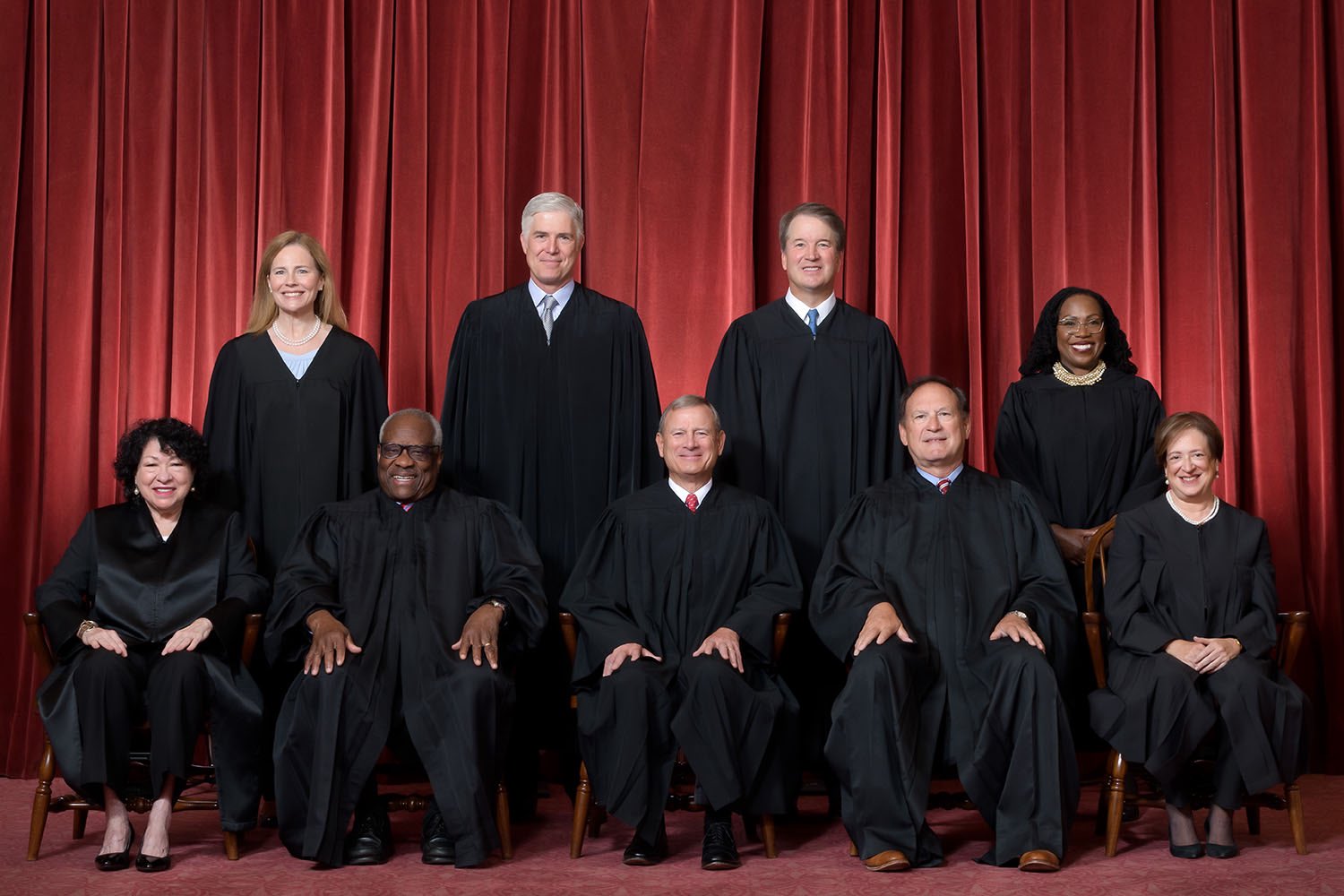
Justice Samuel Alito wrote the majority opinion in the decision on Mullin v. Al Otro Lado. In a 6-3 ruling, the high court said federal law allows the government to turn away migrants at the border to prevent them from claiming asylum.
The Supreme Court vote reverses an opinion by the Ninth Circuit Court of Appeals, which initially ruled that asylum seekers outside the United States land border are still eligible for asylum.
The Supreme Court agreed with the interpretation of “arrives in” and upheld a policy that was adopted a decade ago to combat a surge in the number of Haitian immigrants seeking asylum outside San Diego, according to SCOTUSblog.
U.S. Customs and Border Protection implemented the policy at the center of the case known as “metering” back in 2018. CBP and Border Patrol would stand along the U.S. border with Mexico and turn back noncitizens without valid travel documents, including asylum seekers, before they could enter the United States.
Challengers in the case are Al Otro Lado, Inc., an immigrant rights group, and 13 people who are seeking asylum.
DHS officials said in a news release the Supreme Court handed down three recent decisions that “reaffirm several Trump Administration policies and decisions to secure the homeland and remove criminal illegal aliens from the country.”
The lawsuits are among many cases brought by immigration advocates and upheld by activist judges as a way to take advantage of America’s immigration system, thwart President Donald Trump’s agenda and write their own rules, officials have said.
“These three rulings are all victories for the rule of law and common sense,” Percival said.
DHS Secretary Markwayne Mullin added on X the rulings from the Supreme Court “are all victories for enforcing our nation’s immigration laws. These decisions give us the tools we need to continue securing our nation.”
The three rulings from the Supreme Court this week are all victories for enforcing our nation’s immigration laws.
They include barring aliens from applying for asylum if they haven’t set foot in the United States, making it easier to remove lawful permanent residents who commit… https://t.co/lvlLrYLRJL
— Secretary Markwayne Mullin (@SecMullinDHS) June 25, 2026
The Supreme Court ruled that that asylum seekers standing in Mexico have not “arrived in the United States” under immigration law, meaning they aren’t entitled to inspection or allowed to apply for asylum until they actually cross the border, SCOTUS Wire shared on X.
🚨 In a 6-3 vote, the Supreme Court rules that asylum seekers standing in Mexico have not “arrived in the United States” under immigration law, meaning they aren’t entitled to inspection or allowed to apply for asylum until they actually cross the border. pic.twitter.com/TmPHLnlOWA
— SCOTUS Wire (@scotus_wire) June 25, 2026
Under U.S. law, an asylum seeker who “arrives in” the U.S. is entitled to apply for asylum and generally cannot be removed from the country until their asylum application is processed.
If they reach a port of entry, such as an airport or a land crossing, and tell Border Patrol they want to seek asylum, they are normally screened and then channeled into the asylum system.
Asylum was intended to be a humanitarian effort to help people escape persecution. However, the Biden administration’s border breakdown largely stemmed from an influx of migrants showing up at the border and claiming asylum without any vetting or proof.
Border officials were so overwhelmed, they released millions into the country and told them to show up to their immigration hearing. Biden’s DHS also flew migrants into the country on chartered flights and gave them legal protections.
Not only did it create a backlog of asylum claims, immigration officials relied on the “honor system” to keep track of them after they were paroled into the country.
According to SCOTUSblog author Amy Howe, “The challengers argued, and the U.S. Court of Appeals for the 9th Circuit agreed, that, for purposes of applying for asylum, noncitizens who were turned away from ports of entry before they could cross the border had ‘arrived in’ the United States.”
The justices reversed that decision and held the policy does not violate a federal law that permits noncitizens to apply for asylum when they “arrive in the United States.”
Alito said the question before the court is a “straightforward” one, and whether “an alien who seeks to enter the United States from Mexico ‘arrives in the United States’ when he or she is still in Mexico.” Alito concluded that “a person arrives in a destination when he enters within its area—not before.”
Alito said the conclusion is supported by other immigration laws that distinguish between “actual entrance into the United States and attempted entrance.”
“A running back does not arrive in the end zone when he reaches the 1-yard line,” Alito countered, nor does a letter “arrive in the mailbox when a dog assaults the carrier a step away from the mailbox. A person arrives in a destination only when he enters it, and that conclusion does not change because someone or something blocks entry.”
Justice Sonia Sotomayor wrote the dissenting opinion for the case, which she read from the bench, and expressed strong disagreement with the majority’s decision.
Sotomayor said the ruling creates “‘a perverse incentive’” for asylum seekers to enter the country illegally, adding “More people will die. More people will attempt to cross the border illegally, and some will make it while others will not.”
In her 35-page dissent, Sotomayor challenged Alito’s simplistic interpretation of “arriving in” to mean that someone is physically within a particular space. She argued that the majority’s rationale ignored other contexts where immigrants about to enter the United States are considered to be “arriving,” Fox News Digital reported.
Responding to Sotomayor’s dissent, Alito noted that the “metering” policy had been employed by two different administrations. Both the Obama administration and the first Trump administration used it to deal with surges of asylum seekers an “orderly and humane” manner, according to SCOTUSblog.