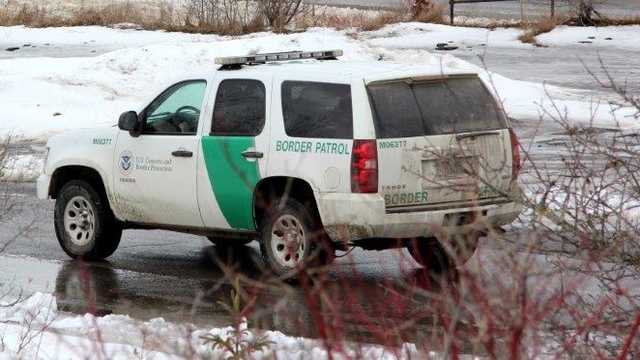
A federal judge in Los Angeles has temporarily blocked California’s recently enacted facial-covering ban for federal immigration officers and other law enforcement.
U.S. District Court Judge Christina Snyder, serving the Central District of California, on Monday granted a preliminary injunction against the sanctuary state’s “No Secret Police Act.”
California passed the law in another effort to hamstring the Trump administration’s immigration agenda by barring federal immigration officers and other law enforcement from wearing masks on duty.
Snyder’s ruling temporarily prevents California from enforcing the mask ban, but she ruled in favor of a separate law requiring officers to wear visible identification.
The Trump administration sued to block the mask ban last November, arguing that California lacked the authority to regulate federal agents.
Although the law applies to various law enforcement agencies with limited exemptions, the Department of Justice argued it targets U.S. Immigration and Customs Enforcement agents carrying out immigration enforcement operations in the state.
The DOJ argued in the lawsuit that immigration agents “face a real threat of criminal liability from state officials who have made clear their intent to target federal officers and disrupt federal law enforcement activities, including federal immigration enforcement.”
Snyder, a Bill Clinton-appointee, sided with the Trump administration, arguing that the law likely discriminates against federal agents and violates the Supremacy Clause.
“Because such discrimination violates the Supremacy Clause, the court is constrained to enjoin the facial covering prohibition,” she wrote.
Although Snyder expressed doubt over the need for masks, saying ICE officers haven’t done so for decades, she ruled that the state illegally targeted the feds, The Washington Times reported. She stayed her ruling for 10 days to give the state a chance to appeal.
Snyder pointed out California exempted its own state officers while penalizing federal agents. In her decision, Snyder said federal law takes precedence over any conflicting state or local law, making the lower-level law unenforceable, Fox News Digital reported.
“The Court finds that federal officers can perform their federal functions without wearing masks,” Snyder said. “However, because the No Secret Police Act, as presently enacted, does not apply equally to all law enforcement officers in the state, it unlawfully discriminates against federal officers.”
The court upheld the No Vigilantes Act, requiring most local, state, and federal officers to display their name or badge number while on duty, Fox 11 Los Angeles reported.
The state’s identification law doesn’t include differential treatment for state versus federal officers, so Snyder said it can take effect. And she still questioned the need for masks since some officers don’t wear them.
“If masking or concealing identification were as critical to federal operations as the United States asserts, the court would expect that federal agencies would not leave such decisions to the discretion of individual officers,” the judge wrote.
Democrats have used inflammatory rhetoric such as “masked goons” and “secret police” to describe ICE agents.
Administration officials maintain ICE agents need to conceal their identity to protect themselves. Increasingly violent protestors, criminal cartels and gangs and detainees trying to resist arrest are targeting officers in retaliation for the enforcement surge.
U.S. Department of Homeland Security officials have reported a 1,000% increase in assaults and an 8,000% increase in death threats against federal agents, fueled by “doxxing” websites that spread officers’ personal information.
Attorney General Pamela Bondi called it “ANOTHER key court victory” and applauded the efforts of U.S. Department of Justice attorneys.
In a post on X, she noted that physical and online attacks against federal agents have skyrocketed, which is why federal agents wear masks to protect their identity.
ANOTHER key court victory thanks to our outstanding @TheJusticeDept attorneys.
Following our arguments, a district court in California BLOCKED the enforcement of a law that would have banned federal agents from wearing masks to protect their identities.
These federal agents are…
— Attorney General Pamela Bondi (@AGPamBondi) February 9, 2026
“These federal agents are harassed, doxxed, obstructed, and attacked on a regular basis just for doing their jobs. We have no tolerance for it,” Bondi wrote. “We will continue fighting and winning in court for President Trump’s law-and-order agenda — and we will ALWAYS have the backs of our great federal law enforcement officers.”
California has filed nearly 50 lawsuits against the Trump administration for various reasons, so it’s no surprise the “No Secret Police Act” is the first such state law enacted in the nation.
Meanwhile, Congressional Democrats are making “unmask ICE” demands a national issue. They have demanded various reforms at ICE as a tradeoff to approve DHS funding for fiscal year 2026, including bans on masking and requirements for agents and officers to wear visible identification.
California’s sanctuary politicians passed Senate Bill 627, known as the “No Secret Police Act,” in September 2025 in an effort to unmask federal law enforcement.
Gov. Gavin Newsom signed the measure into law later that month and it was set to take effect on Jan. 1, 2026. However, the state delayed enforcing the laws against federal agencies while the court considered the DOJ’s request for a preliminary injunction.
SB 627 prohibits local, federal and out of state law enforcement officers, or anyone acting on behalf of a federal officer, including ICE, from wearing ski masks or face coverings to conceal their identities while on duty.
California argued that the laws promote public safety, likening them to speed limits or other traffic laws, and claimed people were impersonating ICE officers.
“Each of the challenged provisions is a legitimate exercise of California’s police powers that ‘at most, only incidentally affects’ federal immigration and law enforcement,” according to the state’s court documents.
But based on the timing, the real intent was to force federal agents to remove masks during immigration enforcement operations. SB 627 was backed by a large coalition of immigrant rights, labor and civil rights organizations.
State Sen. Scott Wiener, the sponsor of the anti-mask law, praised Newsom for signing it. In a Sept. 20, 2025, news release, Wiener said the law would combat ICE’s “secret police tactics” and “defend our immigrant communities and democracy itself.”
After Snyder’s ruling, Wiener said in a statement that he will introduce new legislation to include state officers. Her opinion demonstrates that California has the right to block officers from covering their faces if state officers are included, USA Today reported.
“ICE and Border Patrol are covering their faces to maximize their terror campaign and to insulate themselves from accountability. We won’t let them get away with it,” Wiener, a Democrat whose area of representation includes San Francisco, said in a release announcing legislation to make the ban enforceable.
Snyder’s decision could set a precedent for other states considering similar legislation, indicating state police should be covered by any policy that applies to federal agents.
Snyder ruled the state’s “No Vigilantes Act” could remain in effect. That law, Senate Bill 805, mandates all officers to show their agency affiliation and a personal identifier, such as a badge number, on their uniforms.
After Newsom signed the bills into law, Trump officials told ICE agents to ignore the mask ban. In November, the Justice Department filed a lawsuit against California, Newsom and Attorney General Robert Bonta, claiming that the state does not have the authority to impose rules on federal agents carrying out their law enforcement duty.
Before signing the mask ban, Newsom expressed some skepticism over whether it was constitutional. But the governor called the ruling on the identification law a “win.”
“No badge and no name mean no accountability,” Newsom said in a statement. “California will keep standing up for civil rights and our democr