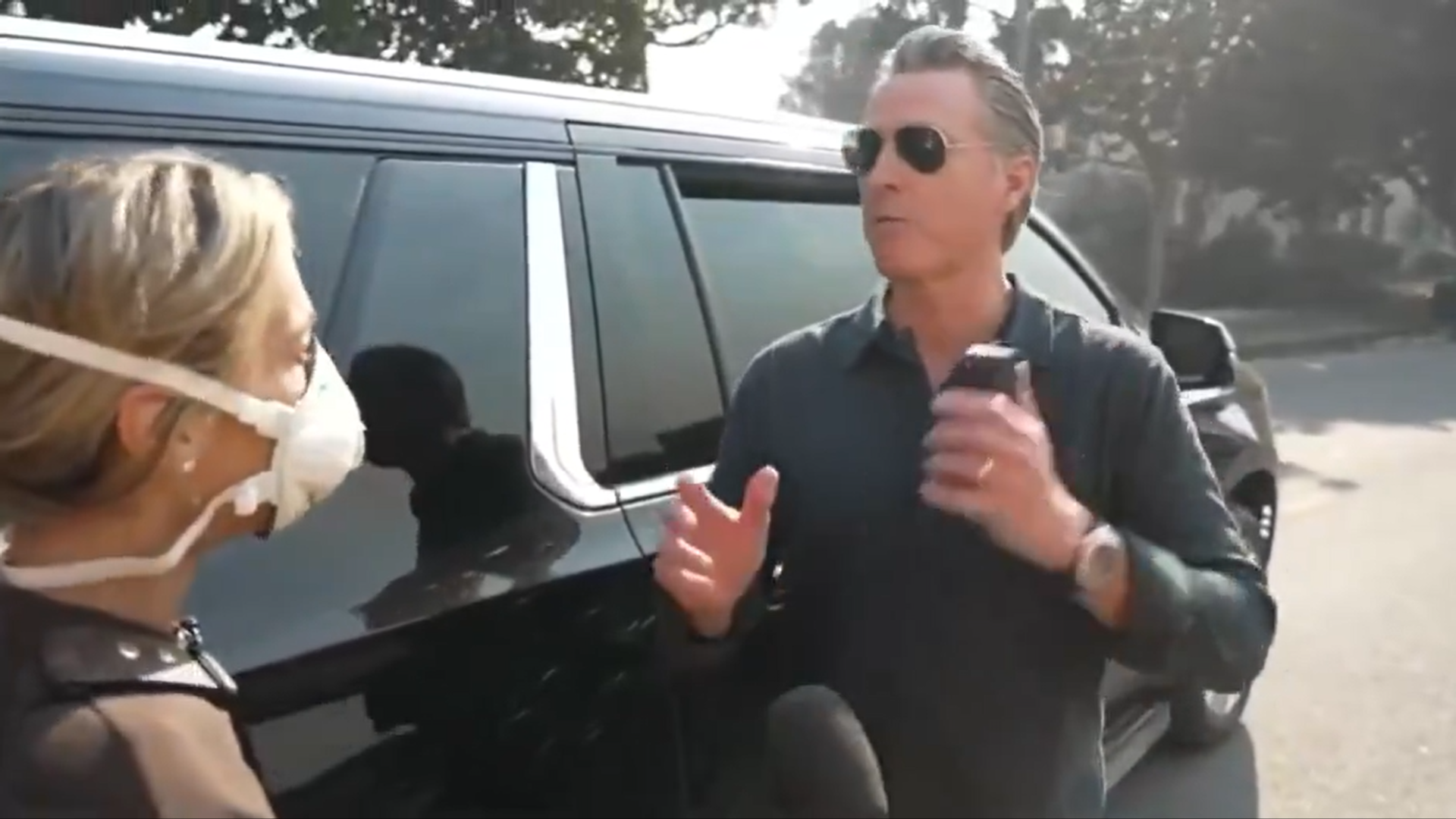
Left-coast courts have issued an emergency injunction after Gov. Gavin Newsom attempted to reveal the identities of federal agents and law enforcement officers to transnational criminal organizations, who have issued bounties for murder and family member abductions.
The U.S. Department of Homeland Security has documented a dramatic surge in threats against Immigration and Customs Enforcement officers, reporting an 8,000% increase in death threats targeting agents and their families since 2025, along with a more than 1,300% rise in assaults and a 3,200% increase in vehicular attacks. DHS attributes this escalation to intensified partisan rhetoric, online doxxing, and coordinated campaigns amid immigration enforcement operations under the Trump administration.
Credible intelligence reveals Mexican criminal cartels collaborating with domestic groups to place bounties on ICE, Customs and Border Protection personnel, including $2,000 for intelligence gathering or doxxing, $5,000–$10,000 for assaults or kidnappings of family members, and up to $50,000 for assassinations of senior officials. A recent arrest involved a Mexican national accused of offering $10,000 bounties on social media for murdering ICE agents. These threats, involving stalking, family targeting, and incentives for violence, have heightened federal concerns over officer safety, making identity protection critical amid high-risk operations.
Amid these dangers, on Feb. 19, 2026, the Ninth U.S. Circuit Court of Appeals – often referred to as the “left-court” or the “Ninth Circus,” due to its justices’ political arguments in rulings – issued a temporary administrative injunction blocking California’s SB 805, known as the “No Vigilantes Act,” while upholding a lower court’s injunction on SB 627, the “No Secret Police Act.”
Both bills, signed into law by Newsom on Sept 20, 2025, would require law enforcement officers, including ICE agents, to visibly display their face, agency name, and either their personal name or badge number while performing enforcement duties in the state.
The federal government shot back, arguing that both laws directly regulate federal officers’ duties without federal consent—violating the Supremacy Clause and intergovernmental immunity doctrine. A federal judge in Los Angeles partially sided with the federal government on Feb. 9.
U.S. District Judge Christina A. Snyder blocked enforcement of SB 627 – the “No Secret Police Act” – against federal officers like ICE agents, finding it discriminates under the Supremacy Clause by exempting state officers from its facial covering ban.
However, in what legal scholars called a “grievous error” in interpretation, Snyder upheld SB 805 – which requires officers to display agency and name or badge number – arguing that the state law should survive unless the federal government could demonstrate grave consequences in having to follow it.
The federal government appealed for emergency relief, and on Feb. 19, the three-judge panel of the Ninth Circuit intervened. Applying the 2008 preliminary injunction standard from Winter v. Natural Resources Defense Council, Inc., the circuit court assessed that the likelihood of success on the merits, irreparable harm, balance of equities, and public interest favored the federal government’s arguments.
“We have evaluated these factors at this very preliminary stage of this appeal, and we conclude that the government has made a sufficient showing to warrant a temporary administrative injunction pending completion of full briefing on the government’s emergency motion for an injunction pending appeal.”
Yet, this is not the first time that Newsom has attempted to exceed his authority as governor. In the 2022 case Geo Grp., Inc. v. Newsom, the Ninth Circuit invalidated a California ban on private immigration detention facilities, ruling it impermissibly gave the state a “virtual power of review” over federal operations and violated intergovernmental immunity by controlling federal functions.
Similarly, this federal challenge centers on the Supremacy Clause via the intergovernmental immunity doctrine, which prevents states from directly regulating the United States or discriminating against it without consent.
Despite the 2022 Supreme Court ruling in United States v. Washington – in which the court reaffirmed the sovereign immunity of the federal government, invalidating a Washington law that discriminated against the federal government – Newsom has persisted in wasting taxpayer dollars on legal fees.
While the governor might blame his lack of understanding on dyslexia again, even the most left-leaning court in the nation understands that Newsom cannot regulate the federal government.
The injunction pauses enforcement while the appeal advances, with oral arguments potentially upcoming on March 3, 2026. Oral arguments are live-streamed, and can be found here once the hearing is scheduled.