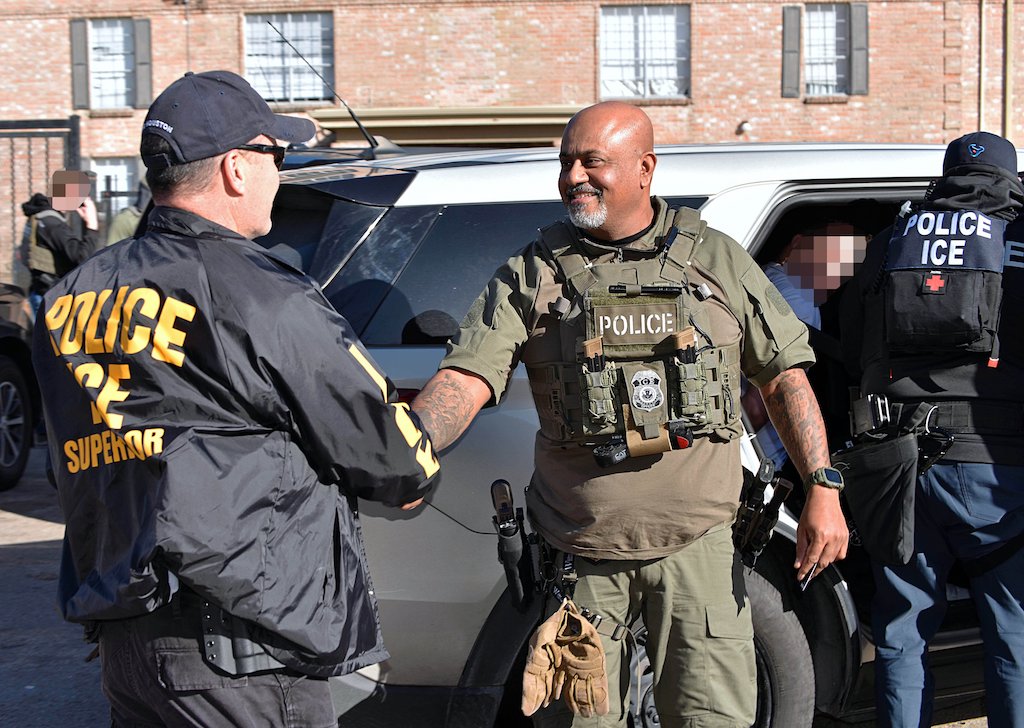
The U.S. government has temporarily closed its Drug Enforcement Administration office in the Dominican Republic over corruption claims linked to a bribery and visa fraud scandal.
A DEA supervisor in charge of anti-drug operations in the Caribbean is accused of accepting thousands of dollars from foreign nationals in exchange for helping them get non-immigrant visas to the United States.
The probe comes amid the Trump administration’s crackdown on narco-terrorism in the Caribbean Sea in an effort to stop illicit drugs from making their way to the United States.
The Dominican Republic is a major transit zone for narcotics leaving South America. Law enforcement authorities in the country have long worked closely with their U.S. counterparts.
Since September, the Department of War has blown up several suspected drug-trafficking boats to cripple criminal cartels operating in Venezuela and other South American countries.
On Monday, the U.S. military continued the “lethal kinetic strikes on three vessels operated by Designated Terrorist Organizations,” the U.S. Southern Command (Southcom) said Tuesday on social media.
Late on Feb. 16, at the direction of #SOUTHCOM commander Gen. Francis L. Donovan, Joint Task Force Southern Spear conducted three lethal kinetic strikes on three vessels operated by Designated Terrorist Organizations. Intelligence confirmed the vessels were transiting along known… pic.twitter.com/mib9XtptSB
— U.S. Southern Command (@Southcom) February 17, 2026
The strikes destroyed three alleged drug-trafficking boats, targeting two in the Eastern Pacific and one in the Caribbean and killing 11 people.
“Intelligence confirmed the vessels were transiting along known narco-trafficking routes and were engaged in narco-trafficking operations,” Southcom posted with footage from the strike.
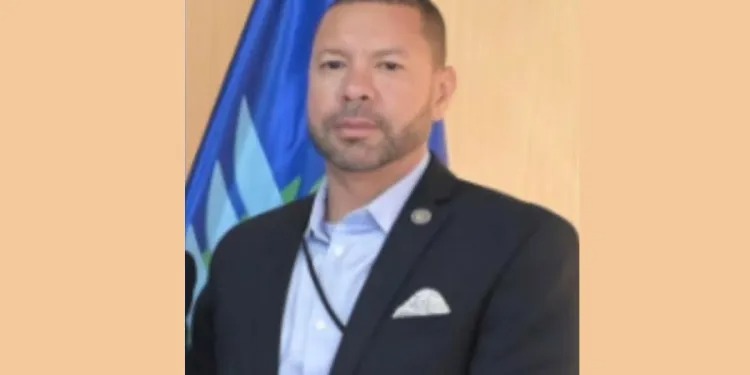
Meanwhile, DEA Supervisor Melitón Cordero, 47, has been charged for his alleged role in a bribery and visa fraud scheme in the Dominican Republic, the Miami Herald reported.
The allegations came to light last week after a complaint was unsealed in federal court, according to news release from U.S. Attorney’s Office, District of Columbia.
“This individual was entrusted by the American people to faithfully execute his duties and represent the American Government abroad as a leader within the DEA,” said U.S. Attorney Jeanine Pirro. “Instead, he is alleged to have broken the law, squandered this special trust and undercut the President’s immigration priorities. This behavior by any government official is unacceptable and will not be tolerated.”
The corruption and fraud probe has temporarily shuttered the closure of the Santo Domingo DEA office, which is one of the Caribbean’s biggest anti-drug operations.
“It is a disgusting and disgraceful violation of public trust to use one’s official capacity for personal gain,” Leah F. Campos, U.S. Ambassador to the Dominican Republic, wrote on X last week as she announced the closure of the DEA office until further notice. “I will not tolerate even the perception of corruption anywhere in the embassy I lead.”
According to charging documents, Cordero accepted money and bribes in exchange for assisting foreign nationals in securing non-immigrant visas that would allow them to visit the United States temporarily, Pirro said in a statement.
Pirro’s office filed charges against Cordero, who spent six years working at the U.S. Embassy in the Dominican Republic. He was arrested Thursday in Washington D.C.
“Let me tell you about something I can’t stand and neither should you, and that is when an individual tries to subvert the president of the United States’ priorities,” Pirro said in a video shared on social media.
“When you sell out our country and you do it with a badge, you need to remember that we’re going to find you and don’t think if you’re outside of the continental United States that we’re not going to know what you are doing.”
The Associated Press reported that Cordero was arrested as part of an investigation into abuse of a U.S. visa program for confidential informants, according to a current and former U.S. official briefed on the matter.
The U.S. Department of Homeland Security led the investigation, which involves a visa program for foreign nationals who agree to help law enforcement, according to the sources who spoke to the AP on the condition of anonymity because the investigation is ongoing.
Every year, the DEA, FBI and other federal law enforcement agencies sponsor the entry of hundreds of foreign nationals in exchange for cooperation in criminal investigations.
People approved for the program might otherwise be considered inadmissible due to their association with criminal activity, the AP reported.
Pirro didn’t go into as many details but said the allegations against Cordero include “moving people up the line” who were waiting to get a visa and creating “false stories so they could get into the United States quicker.”
“We don’t know in the end if those people are even entitled to come into the United States,” Pirro added in the video clip.
Pirro didn’t say how much individuals paid for the preferential treatment, but a source told the Miami Herald that Cordero allegedly charged about $3,000 per visa.
While working at the U.S. embassy in Santo Domingo, Cordero allegedly expedited at least 119 visa applications — at least one of which is believed to have been fraudulent. He is also accused of coaching individuals in preparation for their visa interview with U.S. consular officers.
In one instance, Cordero reportedly met with a foreign national and gave them a passport and visa, allowing travel to the United States, in exchange for cash, according to charging documents.
Pirro said Cordero betrayed his role as someone “entrusted by the American people to faithfully execute his duties and represent the American government abroad as a leader” within the DEA.
A follow-up post by EmbajadaUSAenRD, the Embassy of the United States in the Dominican Republic X account, officials said the temporary closure is intended to allow time for an internal investigation by the Embassy.
“The Dominican Republic remains a fundamental partner in our work to combat narcoterrorism throughout the region,” the post stated. “That work will continue at the same solid pace between the United States Embassy in Santo Domingo and our Dominican partners, even as our internal investigation is carried out.”
In a statement, the DEA said it holds its personnel to the highest standards of integrity and accountability and is working to investigate and address the matter.
“The alleged actions do not reflect the thousands of DEA professionals who serve honorably every day dismantling transnational criminal organizations and protecting communities at home and abroad,” said DEA Administrator Terrance Cole. “We remain steadfast in our commitment to professionalism, transparency, and the rule of law.”
In late November, Dominican President Luis Abinader announced he had authorized the U.S. government to operate inside restricted areas at San Isidro Air Base and Las Américas International Airport to help in its fight against drug trafficking, according to another AP report.
Roberto Alvarez, the foreign minister of the Dominican Republic, noted in a separate post on X that the closure “has categorically no relation whatsoever with the Dominican government or any Dominican official.”
This isn’t the only Caribbean DEA office that has been plagued by allegations of corruption. The Miami Herald reported extensively on a 2015 scandal dubbed “the sugar boat,” involving the Panamanian-flagged ship MV Manzanares that transported as much as 800 kilos of cocaine and 300 kilos of heroin into Port-au-Prince.
The DEA bungled the investigation in Haiti, and the U.S. narco-trafficking case prompted the Justice Department to investigate allegations of wrongdoing by U.S. drug agents in Haiti.
Two veteran DEA agents filed whistle-blower complaints, accusing the agency of failing to address the allegations involving corruption in its Haiti operations.
The DEA announced plans to close its Haiti field office in late 2024 amid increasing concerns over Haiti’s armed gangs trafficking drugs. The agency listed it among 14 foreign operations targeted for closure, along with offices in The Bahamas and Nicaragua.
News of the closure “flabbergasted” Luis Moreno, a retired State Department official who headed the narcotics-control office in Bogotá, Colombia, and once served as deputy chief the U.S. Embassy in Port-au-Prince.
Drug traffickers are corrupting Haiti’s security forces as well as the political system, Moreno told the Miami Herald in October 2024.
“Having the ability to have ears on the ground and to know what the movement is of trafficking and its connection to the gangs and to political corruption, I think that would be essential to everyone,” he said. “We all know that the assassination of President Jovenel Moïse was directly connected with drug trafficking. I’m kind of flabbergasted by this news, to be honest.”