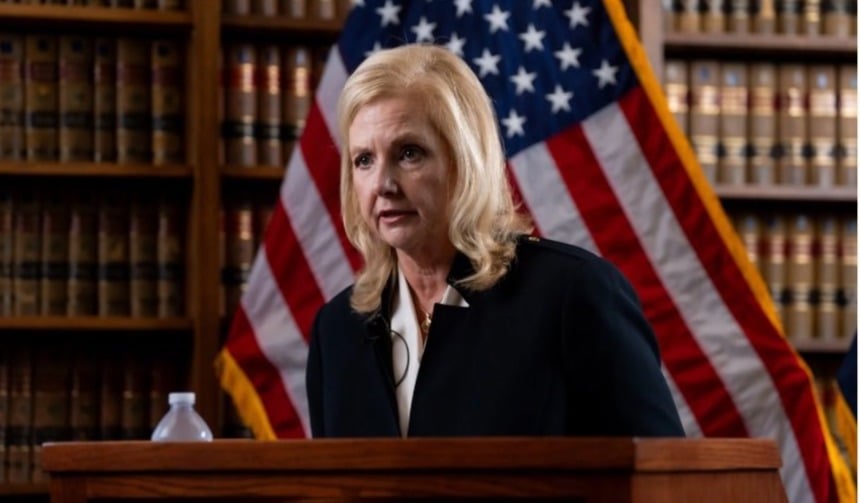
A federal judge on Saturday denied Minnesota’s request to halt an expanded federal immigration enforcement operation in the Minneapolis–St. Paul area, allowing the Trump administration’s deployment of thousands of immigration officers to remain in place.
U.S. District Judge Katherine Menendez ruled that the state is unlikely to succeed in its legal challenge to Operation Metro Surge, a large-scale federal immigration presence in the region.
Minnesota officials, led by Attorney General Keith Ellison, had sought an emergency injunction to block the enforcement surge, arguing that the operation exceeded federal authority, violated state sovereignty, and infringed on civil rights. The state also claimed the enforcement effort was being used as political leverage against Minnesota, a predominantly Democratic state.
In a 30-page decision, Menendez rejected those arguments, finding that the state’s cited precedents did not support its claims. The judge said the plaintiffs were attempting to extend existing constitutional case law beyond its established application.
“Plaintiffs ask the Court to extend existing precedent to a new context where its application is less direct — namely, to an unprecedented deployment of armed federal immigration officers to aggressively enforce immigration statutes,” Menendez wrote. “None of the cases on which they rely have even come close.”
Menendez also concluded that the state failed to demonstrate a likelihood of success on its claim that the enforcement surge violated the Tenth Amendment, which limits federal intrusion into state authority.
The ruling leaves intact the Trump administration’s immigration operation, which was first announced in December. According to federal officials, approximately 3,000 personnel from U.S. Immigration and Customs Enforcement and U.S. Customs and Border Protection are currently deployed in the Minneapolis–St. Paul area as part of Operation Metro Surge.
The administration has described the operation as part of a broader national immigration enforcement effort focused on large metropolitan areas. Minnesota officials have argued that the scale and intensity of the deployment are unprecedented within the state.
Menendez, an appointee of former President Joe Biden, said the court’s role was limited to evaluating the legal merits of the state’s claims, not the policy considerations underlying the enforcement strategy.
The decision marks the latest legal development in a series of clashes between Democratic-led states and the Trump administration over immigration enforcement. Federal officials have not indicated any plans to scale back the Minnesota operation following the ruling.