Senate Democrats voted last week to block legislation funding the Department of Homeland Security, setting off a standoff with Republicans and the White House over immigration enforcement that resulted in a partial government shutdown.
The 55–45 procedural vote came as funding for several federal agencies expired at midnight Saturday after the House of Representatives failed to advance the Senate-approved package. While the shutdown took effect over the weekend, its immediate impact has been limited, as many federal offices do not operate on Saturdays and Sundays.
The Senate package includes full-year funding through Sept. 30 for the Department of Defense, the Department of Health and Human Services, the Treasury Department, the federal court system, and several other agencies. Homeland Security funding, however, was carved out for a short-term extension as negotiations continue over immigration enforcement policy under President Donald Trump.
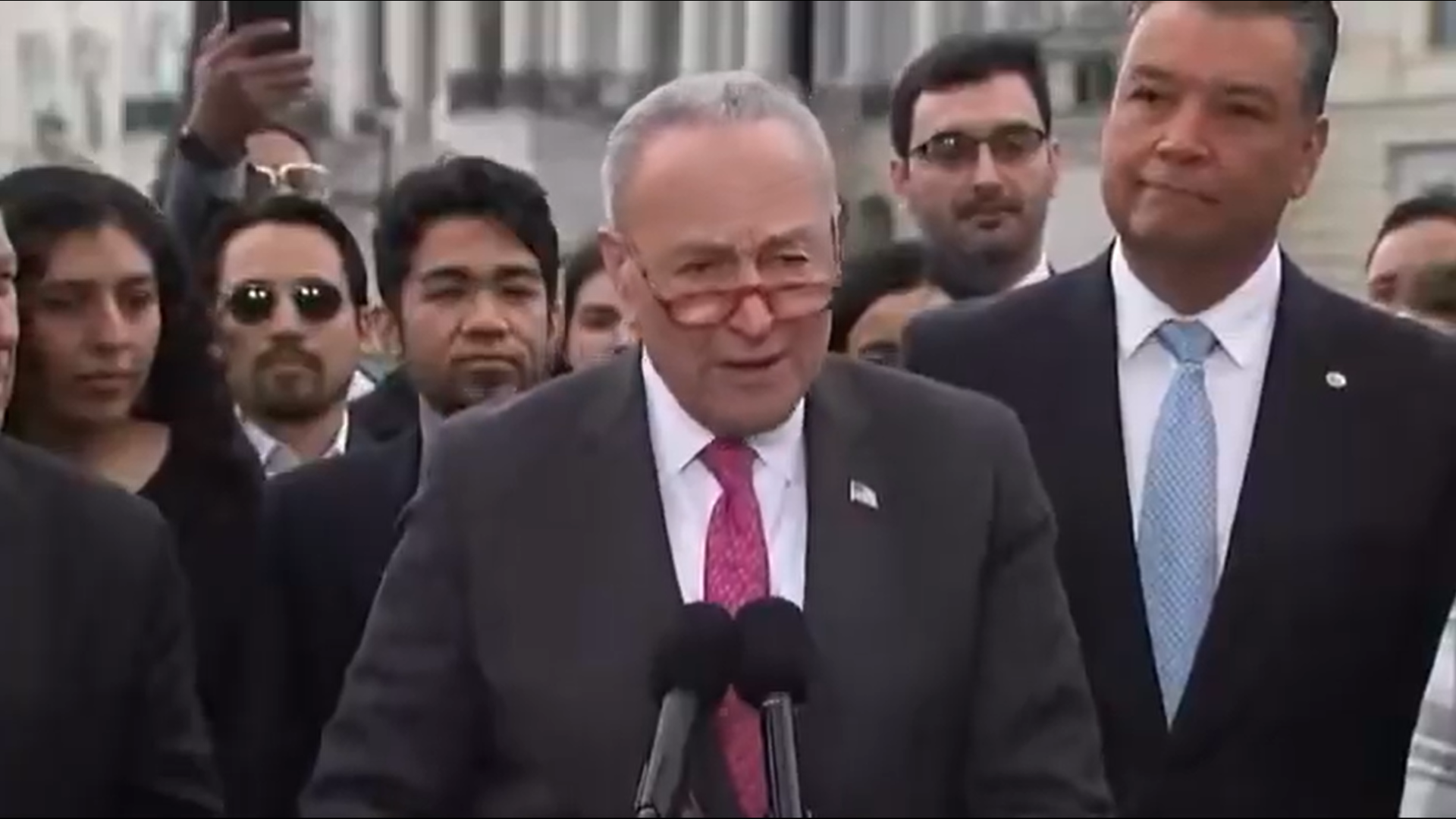
Democrats have said they will continue withholding support unless new restrictions are placed on Immigration and Customs Enforcement. Senate Democratic Leader Chuck Schumer has argued that recent federal immigration actions, particularly in Minnesota, warrant congressional intervention.
Schumer has called for DHS funding to be separated from the broader package, saying Democrats are prepared to pass what they describe as widely supported portions of the budget while continuing debate over immigration enforcement.
“We have five bills we all agree on — about 95 percent of the remaining budget,” said Sen. Patty Murray, the top Democrat on the Senate Appropriations Committee. “We can pass those five bills, no problem.”
Republican leadership has rejected that approach. Senate Majority Leader John Thune moved forward with the test vote last week, saying negotiations were ongoing but making clear that Democratic demands targeting ICE would not be included in the current legislation.
“That’s not going to happen in this bill,” Thune said, adding that immigration policy could be addressed separately through negotiations involving both chambers and the White House.
President Trump said his administration continues to work with congressional Democrats to keep the government open. A White House official warned that prolonged funding lapses could disrupt disaster response efforts and other critical services.
Attention has now shifted to the House, where the Senate-approved package must clear a procedural rule vote before it can advance. Democrats are expected to oppose the rule, potentially delaying consideration further. The House Rules Committee is scheduled to meet Monday afternoon to review the legislation.
Some House Democrats have signaled opposition to the DHS stopgap funding. Rep. Ro Khanna said Sunday that he was urging colleagues to vote against continued ICE funding.
“I just don’t see how in good conscience Democrats can vote for continuing ICE funding,” Khanna said in an interview, citing recent fatal encounters involving federal agents.
Republican leaders, however, said they remain confident the package will pass. House Speaker Mike Johnson said he expects the bills to clear the House within days, though he acknowledged that winter weather could complicate travel for lawmakers. Republicans currently hold a one-vote majority in the chamber.
The funding dispute comes amid ongoing protests in Minneapolis over Operation Metro Surge, a Trump administration immigration enforcement effort that has deployed thousands of agents from ICE and Customs and Border Protection to the region. The operation has drawn sharp criticism from Democratic officials following fatal shootings involving federal agents, prompting renewed calls for changes to ICE protocols, including restrictions on masks and stricter warrant requirements.
The Department of Homeland Security includes multiple agencies beyond ICE, including Customs and Border Protection, the Coast Guard, and the Secret Service. Republicans have argued that blocking DHS funding risks undermining national security and law enforcement operations unrelated to immigration.
With no agreement reached, lawmakers from both parties have acknowledged that the shutdown could continue unless the House advances the Senate package or negotiators reach a compromise on Homeland Security funding.