The Trump administration plans to install 500 miles of buoy barrier in the Rio Grande River, adding an extra deterrent to prevent illegal crossings at the U.S. southern border with Mexico.
The buoys will be placed at the international boundary line between the United States and Mexico, providing a first line of defense in the river, according to U.S. Border Patrol Chief Michael Banks.
U.S. Customs and Border Protection shared footage of the buoys being placed in the river on social media. Crews began to lay the first 17-miles of border buoys on Tuesday, starting in Brownsville, Texas, with 130 miles of the water barrier already under contract.
Keeping America Safe!
Under @POTUS and @Sec_Noem, we are using every tool in our arsenal to defend border security. These new river buoys in the Rio Grande will protect our nation and dissuade illegal aliens from attempting to cross the border.
Read More:… pic.twitter.com/dzGQq9ckXZ
— CBP (@CBP) January 7, 2026
“This is a huge game changer,” Banks said. “We want to take away that initial entry point. You can’t come here and make false asylum claims if you can’t get here, and so our intent is to stop anything from crossing this border illegally.”
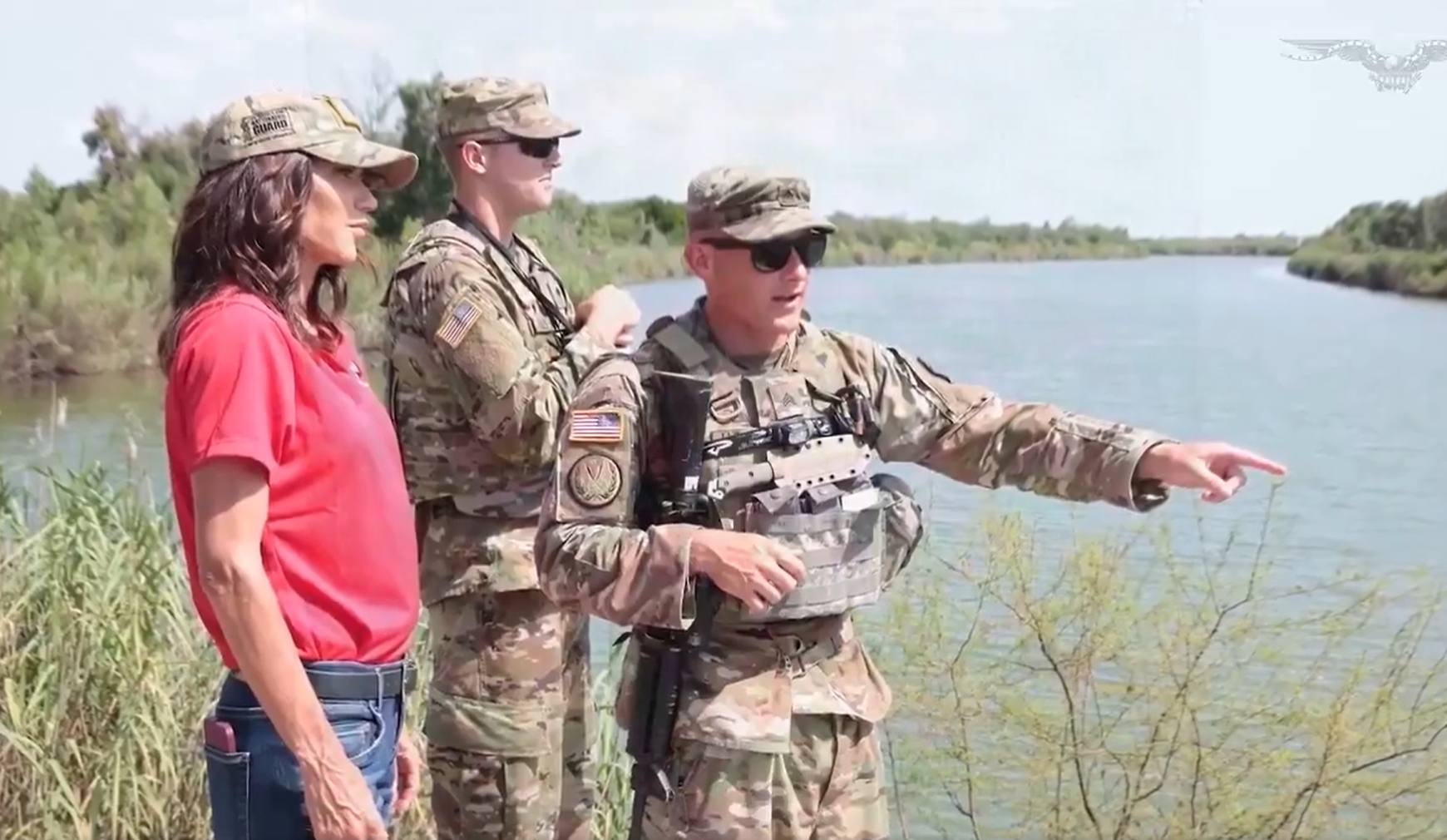
Homeland Security Secretary Kristi Noem also visited the Rio Grande Valley on Wednesday to highlight the Trump administration’s new border security measures.
The buoy system is part of a comprehensive “Smart Wall” expansion made up of steel barriers, waterborne barriers, patrol roads, lights, cameras and high-tech detection methods, The Texas Tribune reported.
“They’ll create a safer environment for agents on patrol, and securing our waterways not only protects Americans, it saves the lives of illegal aliens by deterring them from daring to attempt to cross through this treacherous water,” Noem said.
Noem also held a roundtable discussion with CBP personnel, law enforcement, local lawmakers and ranchers whose property is often traversed by migrants moving north after crossing the border.
This also marks the first time the U.S. government has used a water-based defense system to stop illegal immigration, the Border Patrol’s national chief told the Washington Examiner.
“This would be an effective barrier as part of our total border wall system,” Banks said in a recent video interview with the Examiner.
The floating devices will be installed in the Rio Grande along Texas’ southern border, with plans for 536 miles of buoys in the river. Banks told Border Report that over 90% of the buoys will be put in Texas.
President Donald Trump completed more than 450 miles of border wall projects on land during his first term. In some areas, due to the river’s flood plain, the border wall was built hundreds of feet to more than a mile north of the border.
“This allows us to put early detection and deterrents right down the center of the river on the actual international boundary line and gives us that first point of detection of those trying to enter the country illegally,” Banks said.
The federal initiative is an expansion of a smaller buoy project first launched as part of Texas’ Operation Lone Star in 2023 during the Biden administration.
Gov. Greg Abbott and Banks, who formerly served as the Texas Border Czar before returning to the Border Patrol, led the effort to install the buoys near Eagle Pass, Texas.
“Our border buoy barrier was initially designed, tested and evaluated and we were moving it forward under Trump 45,” Banks said. “During his first term, we had signed contracts and prepared to deploy those buoys. Then the Biden administration came in and said ‘that’s infrastructure. We’re not going to do that.’”
Abbott ordered the installation of a 1,000-foot water barrier along the Rio Grande near Eagle Pass, a hub for illegal crossings during the peak of Biden’s border crisis, and an additional 1,000 feet of buoys after Trump took office in January 2025.
“Texas finally has a partner in the White House,” Andrew Mahaleris, press secretary for Abbott, said in a statement Wednesday. “The floating marine barriers deployed by Texas have been a resounding success, and Governor Abbott is proud to work with the Trump Administration and Border Patrol to expand the program.”
The new federal buoys are different from those put in the river by the State of Texas in 2023, which drew criticism from migrant and environmental activists and led to a lawsuit. Those buoys have anti-tamper metal disks, which critics say can hurt people and wildlife.
The buoy barriers have been improved since 2023, Banks said. They are much bigger — 15 feet long for each buoy — without steel anti-tamper disks in between. And they are cylindrical, not round. They float better and fiber optic sensing technology to detect if someone is trying to cross over it, or if wildlife are stuck in it.
“As you try to climb up on the buoys, they roll backwards preventing you to climb on them, and we’ve also found that using the more cylindrical instead of the circular, we get better flotation, which helps us maintain better control of the buoys,” Banks said.
The goal is to deter migrants from crossing outside of official ports as well as drug smugglers and human traffickers.
This federal expansion will link up with Texas’s smaller project in Eagle Pass, and is expected to further reduce illegal border crossings, which have hit a 55-year low.
They did exactly what we thought they we’re going to do,” Banks said. “They were a huge deterrent. They were almost impenetrable. Texas proved what US Border Patrol believed under Trump 45.”
Banks told the Examiner it’s also a cost savings to the taxpayers in the end “because it is a significant force multiplier allowing us to control much larger areas that river with a significant less amount of manpower.”
The buoys create a two-tier layer system, similar to stretches of the border with physical border walls in Arizona, New Mexico and California that are in the Roosevelt Reservation.
“We build a border wall right on the Roosevelt Easement and we have a patrol zone between that initial boundary and between the secondary wall,” Banks said. “It creates a dual-layer wall that someone has to penetrate to get into the country illegally, and it gives us a patrol zone where we can contain those attempting to come into the country illegally and be able to rapidly respond.”
Banks praised President Trump for listening to Border Patrol agents and giving them the tools to do their job. Banks retired from the Border Patrol under Biden due to his policy and border failures.
The leadership within the Border Patrol is excited and morale among agents is up, Banks said.
“He understands that the U.S. Border Patrol knows how to secure this border and he listens to us and he supports us,” Banks told the Examiner. “I have never seen this much support from a president and a (Homeland Security) secretary. The support is even greater than his first administration.”