A California law that bans federal immigration agents from wearing face masks while on duty is being challenged in court on the grounds it is unconstitutional.
The U.S. Department of Justice filed the lawsuit on Monday against California, Gov. Gavin Newsom and Attorney General Robert Bonta, claiming that the state does not have the authority to impose rules on federal agents carrying out their law enforcement duty.
It’s the latest legal battle between the Trump administration and Newsom over immigration enforcement efforts in the state. The feud has been escalating for months following violent riots that erupted in June and Trump calling in the National Guard to help protect federal buildings.
“Law enforcement officers risk their lives every day to keep Americans safe, and they do not deserve to be doxed or harassed simply for carrying out their duties,” said Attorney General Pam Bondi, in a social media post shared by the DOJ. “California’s anti-law enforcement policies discriminate against the federal government and are designed to create risk for our agents. These laws cannot stand.”
Justice Department Files Complaint Challenging California Mask Ban and Identification Requirements for Federal Officers
"Law enforcement officers risk their lives every day to keep Americans safe, and they do not deserve to be doxed or harassed simply for carrying out their… pic.twitter.com/3XqLse7chU
— U.S. Department of Justice (@TheJusticeDept) November 17, 2025
The complaint was filed in the U.S. District Court for the Central District of California. Federal attorneys maintain that the measures—Senate Bills 627 and 805—violate the Constitution’s Supremacy Clause.
The lawsuit claims California’s new mask ban—the first of its kind in the nation—illegally interferes with and compromises law enforcement activities. The policies also discriminate against law enforcement and endanger officers already under siege.
The DOJ issued a news release and said the laws are “illegal attempts to discriminate against and regulate the federal government.” This lawsuit is the latest of several lawsuits brought by the DOJ Civil Division across the country, including in New York, New Jersey and California.
The DOJ is pushing back against “illegal policies” that have been enacted to impede lawful federal operations, particularly immigration enforcement, Bondi said.
In the lawsuit, the DOJ argued the laws violate long-settled principles of the Supremacy Clause, under which States have no power to “in any manner control the operations of” the Federal Government.
The DOJ urged the court to issue a preliminary injunction blocking California from enforcing the laws, adding that if enforced, the laws would “recklessly endanger the lives of federal agents and their family members.”
The lawsuit also argues that the California laws violate Article 5, Section 301 of the U.S. Code, which says agency heads “may prescribe regulations for the government of his department [and] the conduct of its employees.”
The California State Legislature introduced and approved the bills, dubbed the No Secret Police Act (SB 627) and the No Vigilantes Act (SB 805), and Newsom signed them into law on Sept. 20.
The bills prohibit most law enforcement officers, including federal agents, from wearing masks on the job. In addition, non-uniformed federal officers would be required to visibly display identification during their duties.
The policies are set to take effect Jan. 1, 2026. Violations can result in infractions or misdemeanors.
There are a few exceptions to the mask ban for undercover agents, for those using medical masks like N95 respirators or as part of tactical gear.
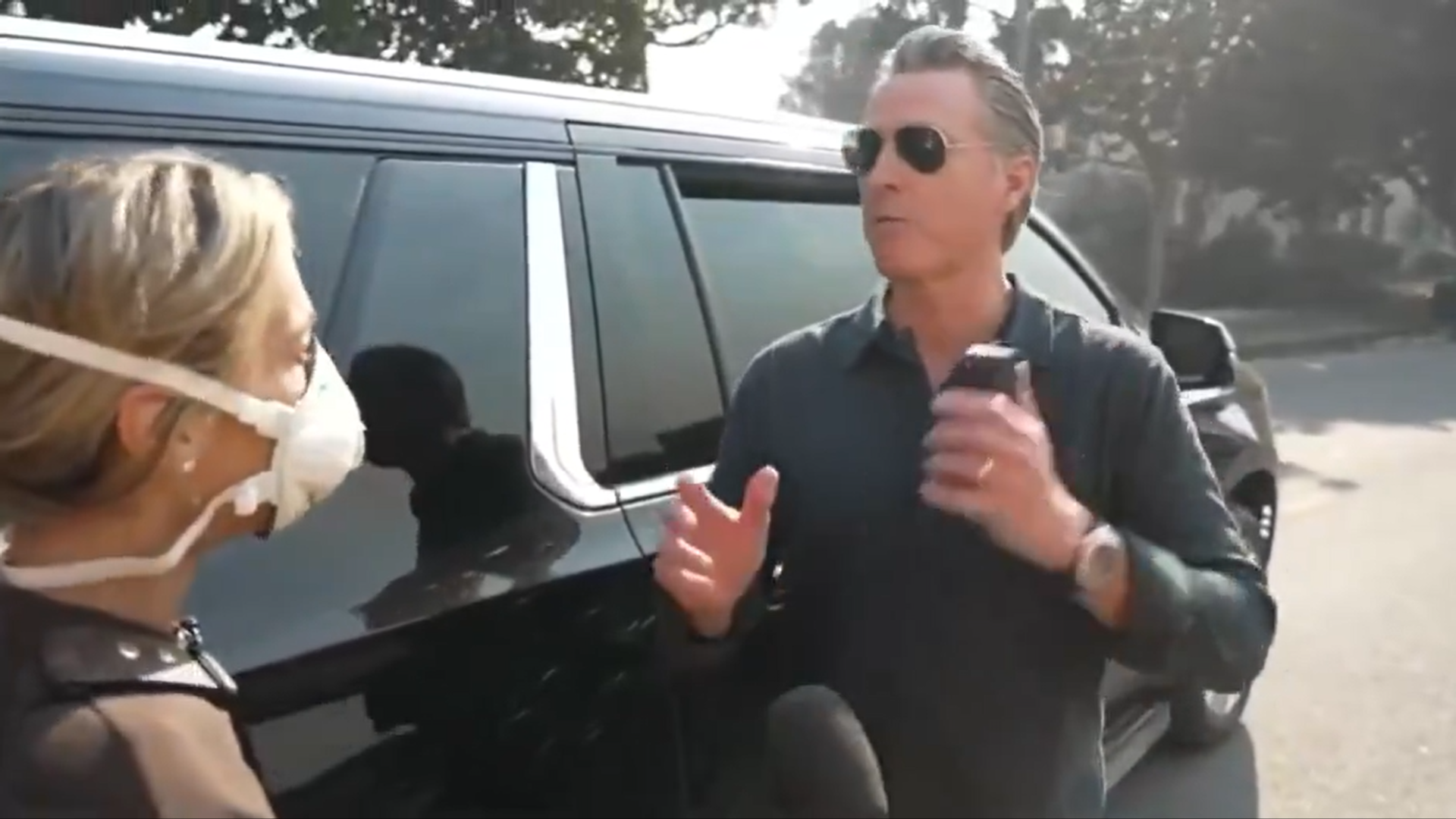
The DOJ filing cites Newsom acknowledging that “it appears we don’t have the legal authority for federal agents” while discussing the mask ban.
“Unconstitutional laws such as this one further endanger our brave men and women protecting our community,” Bill Essayli, First Assistant U.S. Attorney for the Central District of California, shared on his X account. “Our immigration enforcement will continue unabated and unhindered by unconstitutional state laws enacted by irresponsible politicians.”
Agents with U.S. Immigration and Customs Enforcement and other federal agencies started wearing masks to hide their identities after skyrocketing assaults on federal agents.
Online doxing, stalking, death threats and shootings outside of ICE facilities have prompted real concerns for their safety.
Besides reports of people ramming their vehicles into ICE agents and physically assaulting them, an October incident in Houston included a Halloween display depicting “ICE agents hanging by their necks” and a sniper opened fire on an ICE facility in Dallas.
“Threatening officers with prosecution for simply protecting their identities and their families also chills the enforcement of federal law and compromises sensitive law enforcement operations,” the DOJ said a news release. “The danger is acute.”
But Newsom and California’s sanctuary politicians see it differently. Newsom said that federal immigration officers would no longer be “hidden from accountability” while performing operations in California,
Bonta said he was reviewing the lawsuit and Diana Crofts-Pelayo, a spokesperson for Newsom, said the state would see the Justice Department in court, Reuters reported.
“It’s problematic when Californians can’t tell the difference between a law enforcement officer who is charged with protecting them and a criminal who is attempting to cause them harm,” Bonta said in a statement.
In California, violent rioters and “rapid response teams” show up to immigration enforcement efforts, often swarming agents, recording them and throwing rocks and other objects at vehicles.
After Newsom signed the bills into law, Trump officials told ICE agents to ignore the California laws.
The U.S. Department of Homeland Security said on Sept. 22 that it will “NOT comply with Gavin Newsom’s unconstitutional mask ban,” pointing to an increase in threats towards ICE officers.
In the newest lawsuit, the DOJ states in its filing that it “does not intend to comply with the challenged laws.”