President Donald Trump made a campaign promise to cripple foreign drug cartels and stop the flow of deadly drugs into the United States, and so far, he’s making good on that promise.
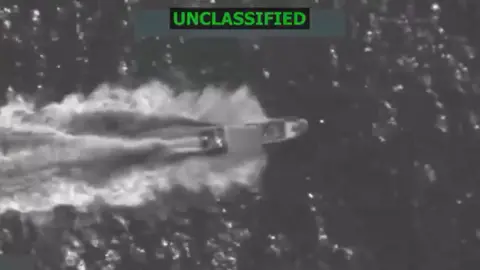
As Commander in Chief, Trump has ordered more than 20 airstrikes targeting drug-running boats in the Caribbean. The strikes have destroyed loads of drugs and killed 87 narcoterrorists, according to War Department Press Secretary Kingsley Wilson.
“If you are a narcoterrorist, no matter what country you’re from, if Venezuela or another country, and you wish to poison the American people, we will hunt you, and we will kill you,” Wilson said.
The Pentagon Press Secretary also fired back at The Washington Post for “scummy reporting” on U.S. efforts to stop drug trafficking from South America.
Wilson oversees a rapid response operation that responds quickly to news media reports deemed inaccurate or misleading by the War Department.
“It’s incredibly frustrating,” Wilson said of a recent story by The Washington Post that tried to discredit War Department Secretary Pete Hegseth. “We have seen the mainstream media lie time and time again about this President’s accomplishments, and this administration is no different. So, we will continue to battle the fake news and push back.”
The U.S. Department of War has moved major military assets to the region in an effort to dismantle Venezuelan dictator Nicolás Maduro’s regime. The airstrikes are to stop drug running from his country to other Caribbean islands as well as the United States.
In an interview with Politico this week, Trump warned that Maduro’s “days are numbered” and wouldn’t rule out sending U.S. ground troops to oust the corrupt left-wing leader, The New York Post reported.
Since Sept. 2, the U.S. military has carried out more than 20 strikes on suspected drug-smuggling boats in the Caribbean Sea and eastern Pacific Ocean.
Trump has blamed the Caracas regime for sending “drug dealers” into the U.S., including members of the notorious Tren de Aragua gang .
Maduro helped manage and ultimately lead Cartel of the Suns, a Venezuelan drug-trafficking organization comprised of high-ranking Venezuelan officials, and worked with violent narco-terrorism groups throughout the region.
In August, the U.S. government increased the reward for information leading to Maduro’s arrest and/or conviction to $50 million. In March 2020, Maduro was charged in the Southern District of New York for narco-terrorism, conspiracy to import cocaine, possession of machine guns and other crimes.
Some might say Trump’s approach is unconventional, but it’s been effective in destroying boats carrying illicit drugs. It’s also drawn the usual, often outlandish pushback from Trump detractors, including the mainstream media.
Democrats have moved from supporting illegal gangbangers to illegal drug runners. Six lawmakers even made a video encouraging members of the military to disobey “illegal orders” without specifying any illegal orders.
The Washington Post ran with a report that has since been disputed by the top admiral for the U.S. military mission against Venezuelan drug cartels, claiming that Hegseth had suggested killing survivors of a boat hit by missiles. Even the New York Times refuted the Post’s story, Just the News reported.
“And that Washington Post story that you mentioned was particularly egregious,” Wilson said. “They attributed a quote to the Secretary of War that he never said. That is absolutely scummy journalism, and anyone who reads The Washington Post should rethink where they’re getting their news.”
A Rasmussen Reports poll this fall showed 62% of Americans supported using the U.S. military to strike drug boats.
And President Trump doesn’t seem deterred, telling Politico’s Dasha Burns that air strikes targeting Venezuelan territory would happen “very soon.”
During the interview, Trump also suggested he may consider similar strikes against targets inside Mexico and Colombia, both of which traffic more fentanyl into the U.S. than cartels from Caracas.
Wilson touted the successful airstrikes and other military operations focused on stopping drugs and securing the U.S. border, including Operation River Wall along the Rio Grande, to combat the trafficking of fentanyl and other illegal drugs in the country.
The troops have embraced the new mission led by the military’s Southern Command.
“We’ve seen a total mind shift, and I think it’s been really important for our warriors that are down in this area, down in Central America and South America, deployed there,” Wilson said. “Previously, they’ve been working on a lot of stuff like climate change. That’s kind of what SouthCom was known for.”
Wilson said the War Department is focused on the current airstrikes but can mobilize for any land operations the president orders.
The asset build-up in the Southern Command region in the Caribbean includes the USS Gerald R. Ford carrier strike group and numerous warships, including naval-guided missile destroyers, amphibious ships and special ops vessels.
“President Trump designated these groups as designated terrorist organizations, and that allows us at the Department of War to really take this threat a lot more seriously than previous administrations have taken it,” Wilson said.
“Now, SouthCom is actively engaging with these Narco terrorists, taking out 87 Narco terrorists to date and making sure that the American people are kept safe,” she added. “And at the end of the day, that’s what our warriors signed up to do, and that’s what President Trump wants them to be able to do unencumbered.”