The White House on Tuesday credited the Trump administration’s large-scale deportation efforts with measurable changes in housing prices, wages, employment trends, and crime rates nationwide, according to data released by the administration.
In a statement issued January 14, the White House said immigration enforcement actions carried out over the past year have coincided with declining home list prices in many major metropolitan areas, rising wages for some American workers, and reductions in violent crime.
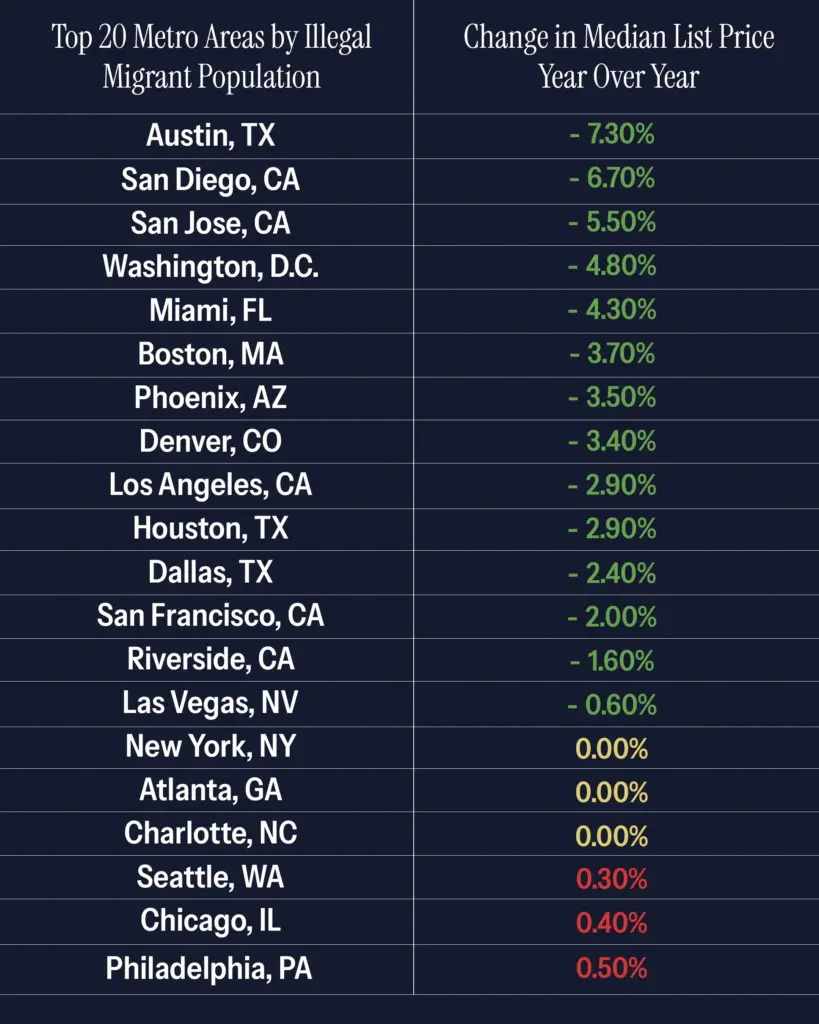
According to the administration, home list prices declined year over year in December in 14 of the 20 metropolitan areas with the largest populations of illegal migrants. The White House said overall home prices fell for the first time in more than two years, citing signs of improved housing affordability. The release noted that the three metro areas among the top 20 that experienced price increases were designated as sanctuary jurisdictions.
The White House also pointed to wage growth in blue-collar industries with high numbers of foreign-born workers, including trucking and construction. The administration said workers in those sectors reported significant pay increases and projected that real wages for American workers are on pace to rise 4.2 percent during President Trump’s first full year in office.
Employment data cited in the release showed a shift in workforce participation between native-born and foreign-born workers. Between January and December 2025, the administration reported that approximately two million native-born Americans gained employment, while 662,000 foreign-born workers lost employment. During the same period, 1.8 million native-born Americans joined the labor force, while 881,000 foreign-born workers exited it.
The White House further attributed nationwide crime reductions to immigration enforcement and expanded law enforcement operations. According to the administration, the United States recorded its largest single-year decline in murders on record last year, alongside decreases in rapes, robberies, aggravated assaults, shooting deaths, law enforcement officer fatalities, traffic deaths, and overdose deaths.
The administration highlighted crime reductions in several major cities following enhanced enforcement efforts. In Washington, D.C., murders reportedly fell 60 percent, carjackings declined 68 percent, and overall crime dropped by nearly one-third compared to the prior year. Chicago recorded its lowest number of murders since 1965, with shootings down by more than one-third. Memphis reported fewer than 200 homicides for the first time since 2019, while New Orleans saw its homicide rate fall to its lowest level in nearly five decades.
The White House said the data reflect outcomes tied to the immigration enforcement policies implemented under Donald Trump, emphasizing border security and removal of individuals in the country illegally.