It “seems like a pattern is emerging” with nefarious activity by Chinese students in Michigan, and it’s “just the tip of the iceberg,” according to national security experts.
Javed Ali, a former counterterrorism official and associate professor at the University of Michigan, told MLive recent cases involving Chinese students at the school attempting to smuggle biological samples into the U.S. are “disturbing” examples of activity that “has been going on for decades.”
“Based on the latest case, seems like a pattern is emerging,” Ali wrote in an email. “(It’s) unclear though whether these are the only ones that will entail arrests or indictments, or whether this is the tip of the iceberg with more to follow.”
Sara Robertson, spokeswoman for Congressman John Moolenaar, R-MI, who chairs of the House Select Committee on the Chinese Communist Party, suggests the latter.
“Our adversaries will look for any angle,” Robertson said in a statement. “This is just the tip of the iceberg, the examples that make the news cycle are just the ones that get caught.”
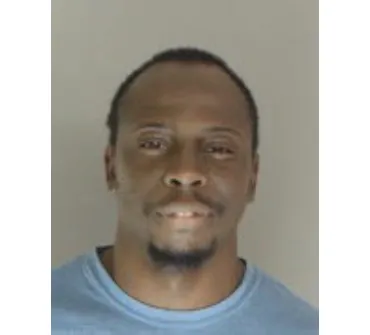
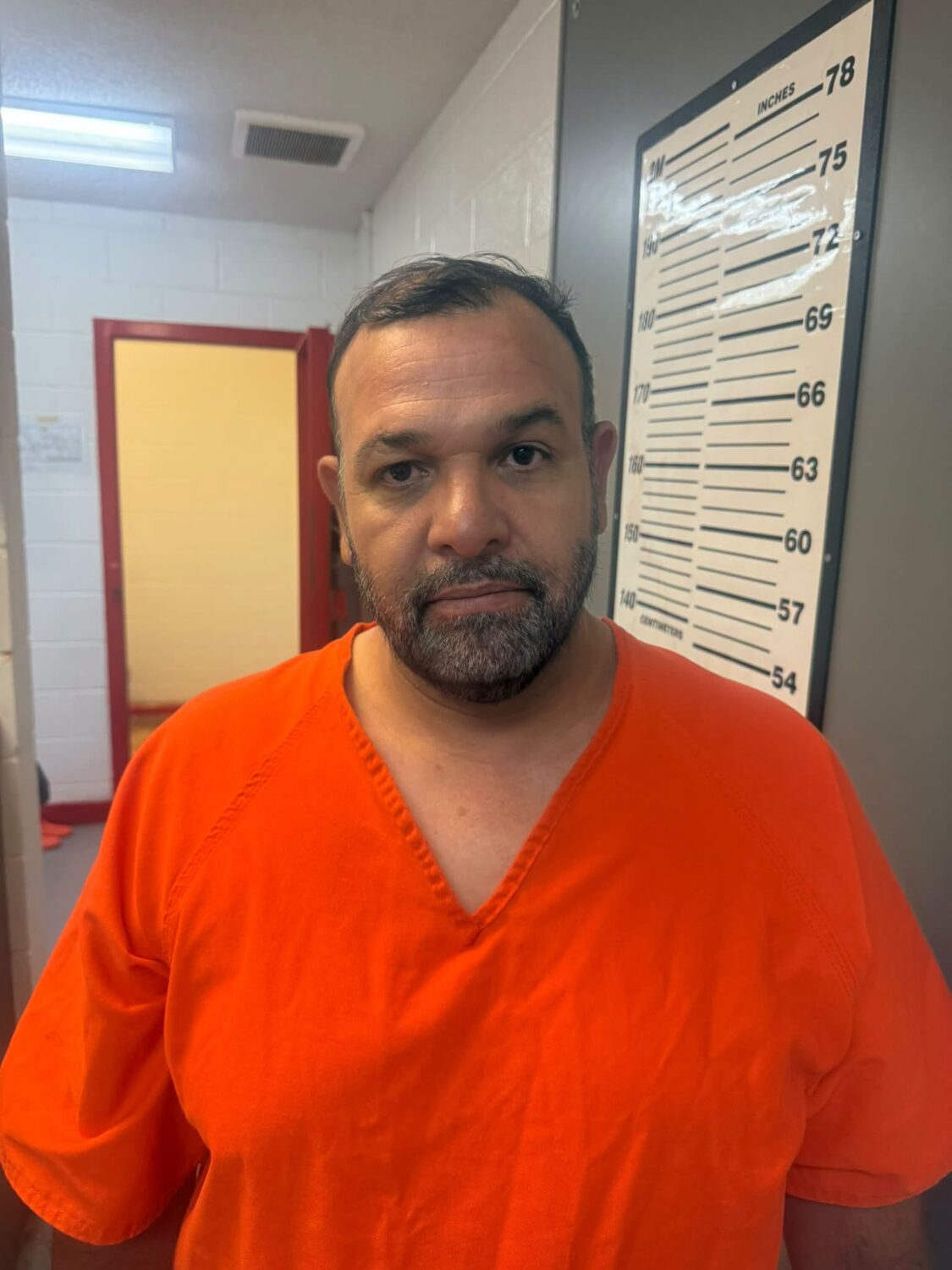
On Monday, federal officials identified a ninth University of Michigan scholar from China tied to alleged crimes in the state following an arrest at the Detroit airport the day prior.
The announcement marked the second week in a row federal officials announced charges against a Chinese national for efforts to smuggle biological materials into the U.S., the latest in a series of alleged crimes involving Chinese UM students dating back to 2023.
The arrest on Sunday involved Chengxuan Han, who allegedly mailed packages believed to contain biological samples of round worms between September 2024 and March to the UM Professional Laboratory where she was invited to work, The Detroit News reports.
Han, a Chinese citizen pursuing a PhD from Huazhong University of Science and Technology in Wuhan, “sent four packages to the United States from the (People’s Republic of China) containing concealed biological material” addressed to individuals associated with the UM lab, according to a news release.
Han was charged with smuggling goods into the United States and providing false statements to federal officials, according to the U.S. Attorney’s Office.
The arrest followed less than a week after U.S. Attorney Jerome Gorgon announced charges of smuggling, false statements, and visa fraud against UM researcher Yunqing Jian, 33, and her boyfriend, Zunyong Liu, 34, both Chinese nationals.
“The FBI arrested Jian in connection with allegations related to Jian’s and Liu’s smuggling into America a fungus called Fusarium graminearum, which scientific literature classifies as a potential agroterrorism weapon,” according to the attorney’s office. “This noxious fungus causes ‘head blight,’ a disease of wheat, barley, maize, and rice, and is responsible for billions of dollars in economic losses worldwide each year.”
Evidence in the case suggests Jain pledges an allegiance to the Chinese Communist Party, and her research was funded by a Chinese foundation backed by the Chinese government.
“This isn’t random—it’s a pattern,” Moolenaar’s Select Committee on the CCP posted to X. “The CCP is exploiting our open system. We need action.”
🚨It’s happened again.
Another Chinese national linked to Wuhan has been caught smuggling biological materials into the U.S. and lying to federal agents.
This isn’t random—it’s a pattern.
The CCP is exploiting our open system. We need action.https://t.co/jUkPSuK23x
— Select Committee on the Chinese Communist Party (@committeeonccp) June 10, 2025
The smuggling cases reinforce “the enduring nature of this sort of threat from foreign governments and foreign intelligence services” and demand the attention of federal and university officials, though it’s difficult to determine whether UM is uniquely vulnerable to such threats, Ali told MLive.
“It’s hard to know in at least the most recent cases,” Ali said, “but this has been going on for decades.”
Ali speculated President Donald Trump’s focus on rooting out threats from China “could be a driver” for the focus on investigations into students with links to China.
Other arrests involving Chinese students at UM, however, occurred well before Trump took office.
Another FBI counterintelligence investigation resulted I charges against five UM graduates from China in October for spying on Camp Grayling National Guard Base during a military training with Taiwanese soldiers in 2023.
Authorities allege the group was found with cameras near military vehicles, tents and classified communications equipment as soldiers conducted Northern Strike, one of the largest training exercises in the U.S.
The Chinese nationals charged in that case left the country following graduation in May 2024, but have outstanding arrest warrants in the U.S.
Also in October, Chinese UM student Haoxiang Gao, 20, cast an illegal ballot that was counted in the 2024 election. Gao surrendered a Chinese passport to face state charges, but used a second passport to board a plane to Shanghai in January, according to the federal criminal complaint cited by The Detroit News.
The cases involving Gao and the alleged spying on Camp Grayling prompted Moolenaar and Rep. Tim Walberg, R-Tipton, to call on UM and other Michigan universities with cooperative agreements with Chinese universities to cut ties, highlighting how China “systematically exploits the open research environment in the United States, actively engaging in theft, espionage, and other hostile actions against U.S. universities perpetrated by the Chinese Communist Party.”
UM, Eastern Michigan University, and Oakland University, heeded the advice.
President Donald Trump’s administration also announced in late May it’s working to “aggressively revoke visas” for Chinese students with connections to the Chinese Communist Party “or studying in critical fields,” according to CNN.
In Lansing, Republicans are working to limit public contracts with countries of concern, ban foreign ownership of lands near sensitive sites, and target other ways the CCP is working to infiltrate critical systems in the state.
Among the bill package approved by the House in early May is legislation aimed at rooting out foreign influence in Michigan’s higher education system.
“In the last four years, universities within the U.S. have received over $29 billion from foreign countries, and much of this comes from foreign governments that are openly hostile to the U.S. like the Chinese Communist Party,” Rep. Will Bruck, R-Erie, said in a statement. “Even more worrisome is that some of these gifts come with strings attached.”
In Washington, Walberg is sponsoring legislation to require stronger disclosure requirements for university research faculty, while Moolenaar is working to ban federal tax credits for companies tied to the CCP, including Gotion, Inc., which is embroiled in a legal battle to build an EV battery component plant in Mecosta County with $715 million in state taxpayer subsidies.
While Ali contends the fungus smuggling case is perhaps the most disturbing, the extent of other efforts to infiltrate U.S. research universities remains unclear, though Ali suspects the problem may be bigger than the public, or even the FBI, understands.
“It’s the FBI that has the best insight into what this activity looks like from what they know,” he told MLive. “But even what they know may not be everything.”