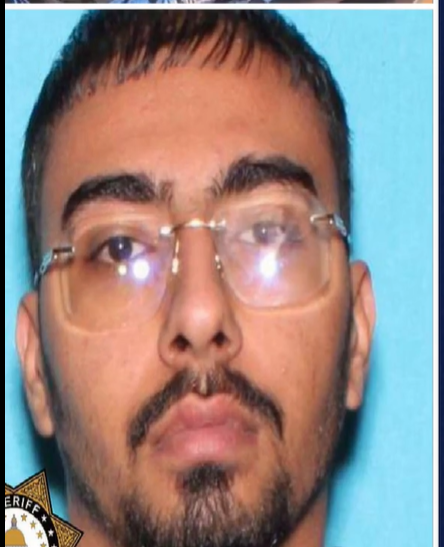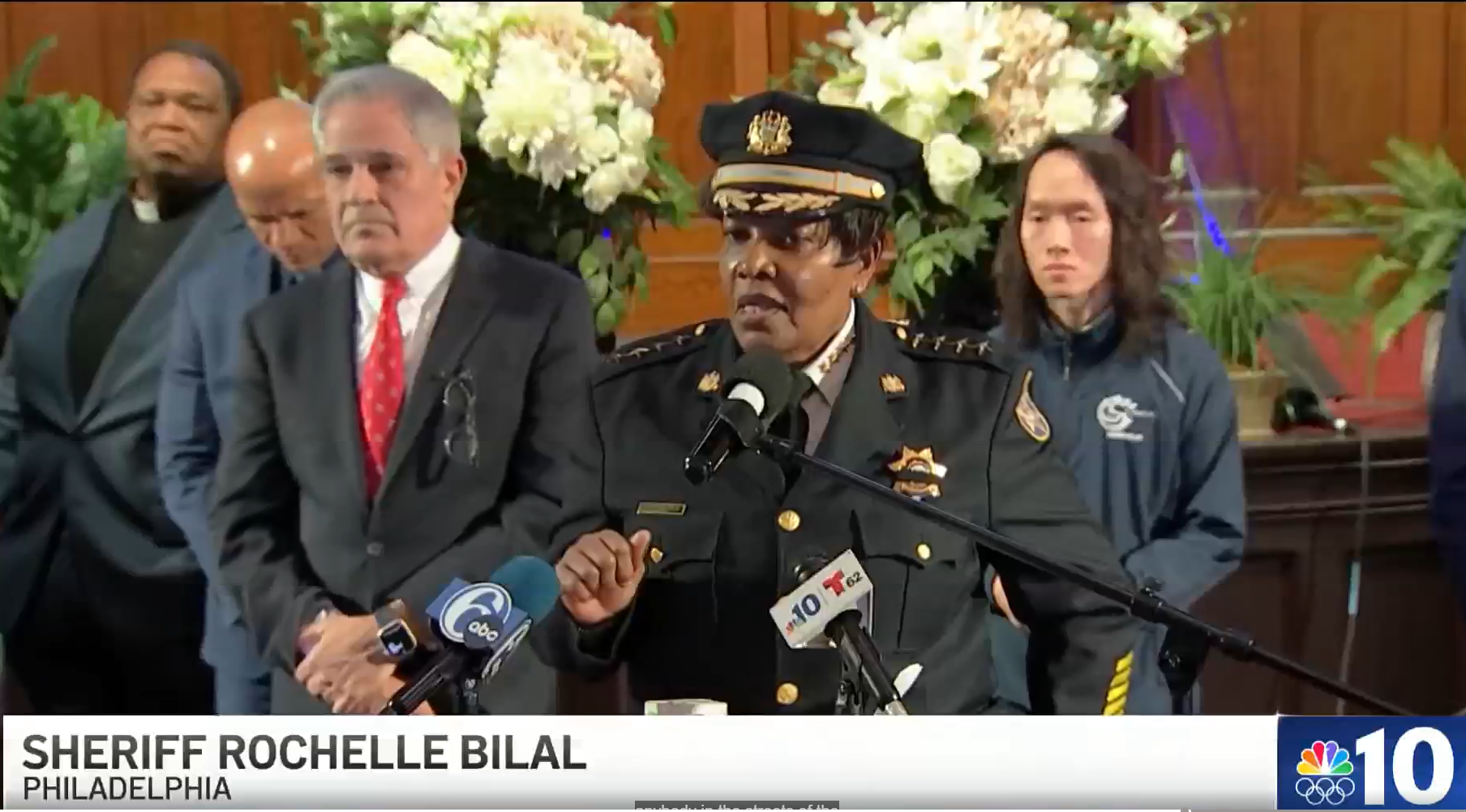
Philadelphia District Attorney Larry Krasner and Sheriff Rochelle Bilal escalated their rhetoric against federal Immigration and Customs Enforcement agents this week, vowing to arrest and prosecute anyone who commits crimes in the city as it braces for potential mass raids amid its role as a longstanding sanctuary city.
The threats, delivered during a Jan. 14 news conference at Salt and Light Church in the Kingsessing neighborhood, follow the fatal shooting of Renee Nicole Good in Minneapolis that sparked organized protests nationwide.
Krasner and Bilal, flanked by city council members and community leaders, directly addressed federal agents:
“We will arrest you. We will handcuff you. We will close those cuffs. We will put you in a cell. We will set your bail and I’m going to ask for it to be appropriately high,” DA Larry Krasner said. “We will do everything in our power to convict you and we will make sure you serve your entire sentence because Donald Trump has no power whatsoever to pardon you.”
“We will arrest you. We will handcuff you. We will close those cuffs. We will put you in a cell. We will set your bail and I'm going to ask for it to be appropriately high," said Krasner. https://t.co/Ztm0WUfoF8
— Larry Krasner (@LarryKrasnerDA) January 14, 2026
The DA has received criticism for allegedly being soft on prosecuting violent criminals in the past, including dropping charges against Keon King, who was accused of kidnapping and strangulation last June. King subsequently was charged with the kidnapping and murder of 23-year-old Kada Scott.
Sheriff Bilal, who earlier called ICE agents “made-up, fake, wannabe law enforcement” and warned they violate both legal and moral standards, doubled down.
“You don’t want this smoke, ’cause we will bring it to you,” she declared, emphasizing that agents committing crimes would face arrest, prosecution, and jail without escape. “The smoke means, you will get arrested, you will get prosecuted and you will go to jail,” she added.
The remarks build on Philadelphia’s sanctuary policies, which limit local cooperation with ICE, including refusing to honor immigration detainers. However, the statements drew immediate backlash.
Pennsylvania lawmakers warned that Krasner and Bilal lack authority to obstruct federal operations under the U.S. Constitution’s Supremacy Clause. Individuals (including officials) who willfully obstruct federal officers, violate immigration statutes, or impede officers under 18 U.S.C. § 111, face felony charges, fines, and imprisonment.
Federal preemption under the Immigration and Nationality Act (INA) stems from the Supremacy Clause of the U.S. Constitution (Article VI, Clause 2), which establishes that federal law is the “supreme Law of the Land” and overrides conflicting state or local measures.
The INA provides a comprehensive federal framework governing immigration, including the admission, exclusion, removal, and naturalization of noncitizens. The Supreme Court has repeatedly held that immigration is a field of exclusive federal authority (often described as “plenary” power), with broad implications for preemption.
While the executive branch has broad preemptive powers under the INA, it also has the right to invoke the Insurrection Act—the Act authorized by Congress that gives the executive branch authority to suspend Posse Comitatus.
While rare, the Insurrection Act has been used about 30 times historically, such as during the Civil War, civil rights enforcement of desegregation, and during the 1992 Los Angeles riots.
If President Trump were to invoke the Insurrection Act (10 U.S.C. §§ 251–255), it would allow him to federalize the National Guard for domestic purposes where obstructions to federal law make it “impracticable” to enforce laws through normal means.
While the Insurrection Act has yet to be invoked, should smokey rhetoric cross the line into obstruction, the city of brotherly love risks inviting a band of brothers—in-arms.